

Alright, folks! If you're working on a project that needs welded wire mesh rolls, figuring out how much you need can be a real head - scratcher. But don't worry, as a supplier of welded wire mesh rolls, I'm here to walk you through the process step by step.
First things first, you gotta understand your project. What kind of project is it? Is it for a construction site to reinforce concrete? Maybe it's for a garden fence to keep out critters? Or perhaps it's for a security barrier around a property. Each type of project will have different requirements for the welded wire mesh.

Let's start with measuring. This is the most basic but crucial part. For a rectangular area, like a garden plot you want to fence in, measure the length and width. Use a measuring tape, and make sure you measure from end - to - end accurately. If it's not a perfect rectangle, break the area down into smaller rectangles or squares and measure each part separately.
Once you have the measurements, calculate the area. For a rectangle, you just multiply the length by the width. For example, if your garden is 10 meters long and 5 meters wide, the area is 10 x 5 = 50 square meters.
But wait, it's not always as simple as just covering the whole area with the mesh. You need to consider the purpose of the mesh. If it's a fence, you need to take into account the height as well. Suppose you want a fence that's 2 meters high for your 50 - square - meter garden. The perimeter of the garden (if it's a rectangle) is 2 x (10 + 5)=30 meters. The area of the fence you need to cover is the perimeter times the height, so 30 x 2 = 60 square meters.
Another factor to think about is the overlap. When you install the welded wire mesh rolls, you'll usually need to overlap the edges to make the structure stronger. A common overlap is about 10 - 15 centimeters. This means you'll need a bit more mesh than the actual area you calculated. So, for our 60 - square - meter fence example, if we account for an overlap of say 12 centimeters (0.12 meters) around the edges, we'll have to add some extra square meters.
The shape of the area also matters. If it has curves or angles, you need to be extra careful. For curved areas, you can approximate by using smaller sections of the mesh to fit the curve. It's better to buy a bit more mesh than you think you need to ensure you can make it work around these tricky parts.
Now, let's talk about the size of the welded wire mesh rolls. Our rolls come in different widths and lengths. The most common widths are 1 meter, 1.2 meters, and 1.5 meters, and the lengths can vary from 10 meters to 30 meters. You need to choose a roll size that makes sense for your project. If your area is narrow, a narrower roll might be more suitable. If it's a large, open area, a wider roll can save you time on installation.
To figure out how many rolls you need, divide the total area you calculated (after accounting for overlap) by the area of one roll. For example, if a roll is 1 meter wide and 20 meters long, the area of one roll is 1 x 20 = 20 square meters. If your total area is 60 square meters, you'll need 60 / 20 = 3 rolls. But remember, you might need a bit more for the reasons we discussed earlier.
You also have to consider the type of welded wire mesh you need. We offer various options, including Stainless Steel Woven Wire Mesh. This type of mesh is great for projects where corrosion resistance is important, like in coastal areas or near chemical plants.
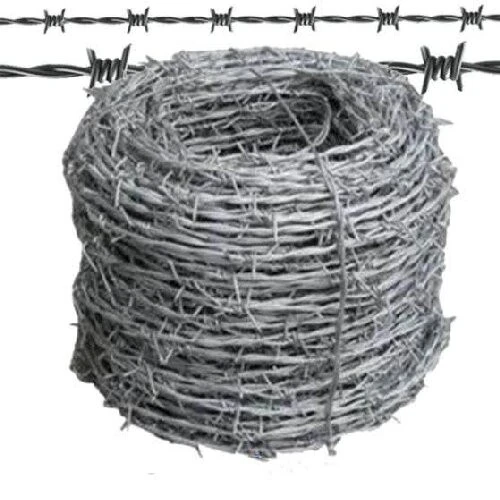
If security is your main concern, we have Barbed Wire(Galvanized Or PVC Coating) and Galvanized Razor Blade Barbed Wire. These strong and durable options can provide an extra layer of protection.
In some cases, the thickness of the wire in the mesh also affects the needs. Thicker wire meshes are more sturdy but might be heavier and more expensive. Thinner wire meshes are lighter and cheaper but might not be as strong. You need to balance your requirements for strength and cost.
It's also a good idea to consult with an expert or someone who has done similar projects before. If you're not sure about your calculations, reach out to us. We've been in the business for a long time and can help you double - check your numbers.
Once you've estimated the amount of welded wire mesh rolls needed for your project, it's a good idea to add a buffer of about 5 - 10%. This is just in case there are any cutting mistakes, damages during installation, or unforeseen changes in your project plan.
In conclusion, estimating the amount of welded wire mesh rolls for a project involves a few key steps: accurately measuring your area, considering the purpose of the mesh, accounting for overlap, choosing the right roll size and type of mesh, and adding a buffer. It's not always easy, but with a bit of careful planning, you can get it right.
If you're ready to start your project and need high - quality welded wire mesh rolls, feel free to contact us. We're here to help you every step of the way, from estimating to installation advice. Let's work together to make your project a success!
References
- General construction material knowledge and experience in the welded wire mesh industry.
- Previous project case studies of using welded wire mesh in different applications.