

When it comes to the world of industrial materials, stainless steel wire mesh stands out as a versatile and essential product. As a seasoned stainless steel wire mesh supplier, I've witnessed firsthand the importance of understanding how to measure the quality of this material. In this blog post, I'll share my insights on the key factors to consider when evaluating the quality of stainless steel wire mesh.
Material Composition
The first and most fundamental aspect of measuring the quality of stainless steel wire mesh is its material composition. Stainless steel is an alloy primarily composed of iron, chromium, and nickel, with varying amounts of other elements such as molybdenum, titanium, and copper. The specific composition of the stainless steel used in the wire mesh determines its corrosion resistance, strength, and other properties.
The most common grades of stainless steel used in wire mesh are 304 and 316. 304 Stainless Steel Wire Mesh contains 18-20% chromium and 8-10.5% nickel, providing good corrosion resistance in most environments. It is widely used in applications such as filtration, screening, and reinforcement. On the other hand, 316 stainless steel contains 16-18% chromium, 10-14% nickel, and 2-3% molybdenum, which enhances its corrosion resistance, especially in harsh or corrosive environments.
To ensure the quality of the stainless steel wire mesh, it's important to verify the material grade and composition. This can be done through chemical analysis, which can determine the exact percentage of each element in the alloy. Reputable suppliers will provide material certificates that indicate the grade and composition of the stainless steel used in their wire mesh products.
Wire Diameter and Mesh Size
The wire diameter and mesh size are two critical parameters that affect the performance and quality of stainless steel wire mesh. The wire diameter refers to the thickness of the individual wires used to make the mesh, while the mesh size refers to the number of openings per linear inch.
A smaller wire diameter generally results in a finer mesh with smaller openings, which is suitable for applications that require high filtration efficiency or fine screening. Conversely, a larger wire diameter provides greater strength and durability, making it suitable for applications that require heavy-duty use or resistance to abrasion.
The mesh size is typically specified as the number of openings per linear inch, such as 10 mesh, 20 mesh, or 50 mesh. A higher mesh number indicates a finer mesh with smaller openings, while a lower mesh number indicates a coarser mesh with larger openings. The choice of mesh size depends on the specific application requirements, such as the size of the particles to be filtered or screened.
When measuring the quality of stainless steel wire mesh, it's important to ensure that the wire diameter and mesh size meet the specified requirements. This can be done using a micrometer or caliper to measure the wire diameter and a mesh gauge to measure the mesh size. Any deviations from the specified values can affect the performance and quality of the wire mesh.
Weave Pattern
The weave pattern is another important factor that affects the quality and performance of stainless steel wire mesh. There are several different weave patterns available, each with its own unique characteristics and applications.
The most common weave patterns for stainless steel wire mesh are plain weave, twill weave, and Dutch weave. Stainless Steel Crimped Wire Mesh is often used in plain weave, where the wires are woven in a simple over-and-under pattern. This weave pattern provides a uniform and balanced structure, making it suitable for a wide range of applications, such as filtration, screening, and reinforcement.
Twill weave is similar to plain weave, but the wires are woven in a diagonal pattern, which provides greater strength and stability. Twill weave is often used in applications that require high tensile strength or resistance to tearing.
Dutch weave is a more complex weave pattern that uses different wire diameters for the warp and weft wires. This results in a mesh with a very fine and uniform opening on one side and a coarser opening on the other side. Dutch weave is commonly used in applications that require high filtration efficiency, such as in the food and beverage industry or in chemical processing.
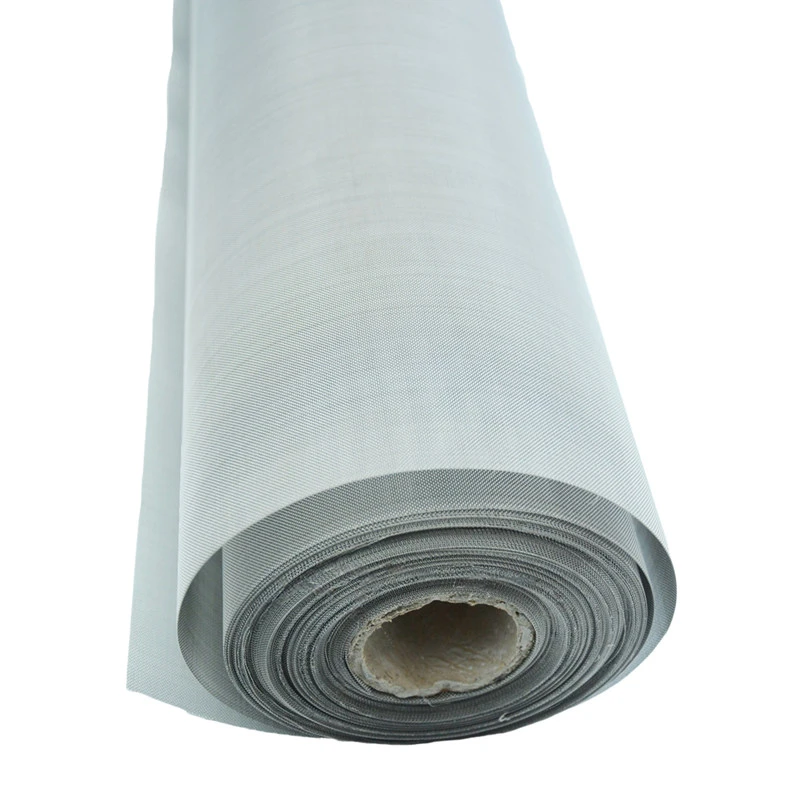
When evaluating the quality of stainless steel wire mesh, it's important to consider the weave pattern and its suitability for the specific application. The weave pattern should be uniform and consistent throughout the mesh, with no loose or broken wires.

Surface Finish
The surface finish of stainless steel wire mesh can also affect its quality and performance. A smooth and clean surface finish provides better corrosion resistance and reduces the risk of contamination. It also makes the wire mesh easier to clean and maintain.
There are several different surface finishes available for stainless steel wire mesh, including mill finish, polished finish, and electro-polished finish. Mill finish is the standard surface finish for stainless steel wire mesh, which has a dull and slightly rough appearance. Polished finish provides a smoother and more reflective surface, which enhances the aesthetic appeal of the wire mesh. Electro-polished finish is a more advanced surface treatment that uses an electrochemical process to remove impurities and create a smooth and uniform surface finish.
When measuring the quality of stainless steel wire mesh, it's important to inspect the surface finish for any defects or imperfections, such as scratches, dents, or rust. The surface finish should be consistent throughout the mesh, with no signs of unevenness or discoloration.
Tensile Strength and Elongation
Tensile strength and elongation are two important mechanical properties that measure the strength and flexibility of stainless steel wire mesh. Tensile strength refers to the maximum amount of stress that the wire mesh can withstand before breaking, while elongation refers to the amount of stretch or deformation that the wire mesh can undergo before breaking.
A higher tensile strength indicates greater strength and durability, making the wire mesh suitable for applications that require heavy-duty use or resistance to high loads. Elongation is also an important property, as it allows the wire mesh to deform without breaking under stress, which can prevent sudden failure or damage.
When measuring the quality of stainless steel wire mesh, it's important to test the tensile strength and elongation to ensure that they meet the specified requirements. This can be done using a tensile testing machine, which applies a gradually increasing load to the wire mesh until it breaks. The results of the tensile test can provide valuable information about the strength and flexibility of the wire mesh.
Corrosion Resistance
Corrosion resistance is one of the most important properties of stainless steel wire mesh, especially in applications that involve exposure to harsh or corrosive environments. The corrosion resistance of stainless steel wire mesh depends on several factors, including the material composition, surface finish, and environmental conditions.
As mentioned earlier, the specific composition of the stainless steel used in the wire mesh determines its corrosion resistance. Stainless steel grades such as 304 and 316 provide good corrosion resistance in most environments, but they may not be suitable for applications that involve exposure to highly corrosive chemicals or saltwater.
The surface finish of the wire mesh also plays a role in its corrosion resistance. A smooth and clean surface finish provides better protection against corrosion, as it reduces the surface area available for corrosion to occur. Electro-polished finish is often used to enhance the corrosion resistance of stainless steel wire mesh, as it removes impurities and creates a more uniform and corrosion-resistant surface.
To measure the corrosion resistance of stainless steel wire mesh, it's important to conduct corrosion tests in the specific environment where the wire mesh will be used. This can involve exposing the wire mesh to a corrosive solution or salt spray for a specified period of time and then evaluating the extent of corrosion.
Conclusion
Measuring the quality of stainless steel wire mesh is a complex process that involves evaluating several different factors, including material composition, wire diameter and mesh size, weave pattern, surface finish, tensile strength and elongation, and corrosion resistance. As a stainless steel wire mesh supplier, I understand the importance of providing high-quality products that meet the specific requirements of our customers.
If you're in the market for stainless steel wire mesh, I encourage you to contact us to discuss your needs. Our team of experts can help you select the right grade, size, and weave pattern for your application, and we can provide you with detailed information about the quality and performance of our products. Whether you need 304 Stainless Steel Wire Mesh for filtration, Stainless Steel Crimped Wire Mesh for reinforcement, or Stainless Steel Wire Mesh Window Screen for insect protection, we have the expertise and experience to meet your needs.
References
- ASM Handbook, Volume 1: Properties and Selection: Irons, Steels, and High-Performance Alloys
- ASTM International Standards for Stainless Steel Wire Mesh
- Corrosion Resistance of Stainless Steels by George S. Frankel